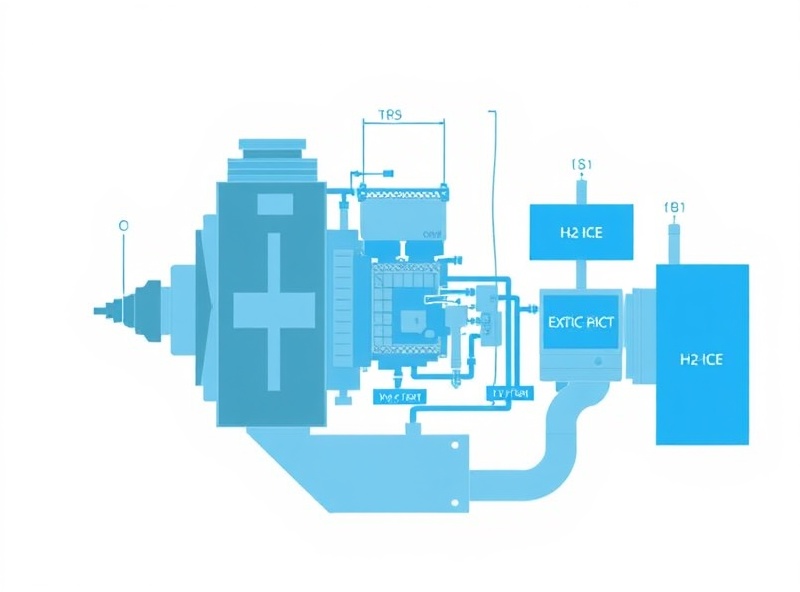
Both H2-ICE and Fuel Cell Electric Vehicles (FCEVs) are hydrogen-powered zero-emission vehicles. But they operate on fundamentally different principles. Understanding these differences is essential for fleet operators evaluating hydrogen conversion options.
Technology Overview
H2-ICE (Hydrogen Internal Combustion Engine): A hydrogen combustion engine burns hydrogen fuel in a modified internal combustion engine. Hydrogen gas is injected into cylinders, compressed, ignited by spark plugs, and combusted to produce power. Water is the only exhaust product (plus trace NOx, controlled by aftertreatment systems).
FCEV (Fuel Cell Electric Vehicle): A fuel cell is an electrochemical device that combines hydrogen and oxygen to produce electricity. This electricity powers an electric motor. Water is the only exhaust product—no NOx, no combustion byproducts.
Efficiency Comparison
FCEV fuel cells are more efficient at converting hydrogen energy to electricity: approximately 60% efficiency at the fuel cell stack.
H2-ICE engines have lower efficiency: approximately 40% at the engine level. However, this must be contextualized.
Well-to-Wheel Efficiency: When accounting for hydrogen production, compression, storage, and losses:
- FCEV: Approximately 35% well-to-wheel efficiency
- H2-ICE: Approximately 30% well-to-wheel efficiency
The gap is narrower than engine-level comparisons suggest. Both are significantly more efficient than conventional diesel (approximately 25% well-to-wheel).
Cost Comparison
Vehicle Acquisition Cost:
- H2-ICE conversion: A$85,000-110,000 per vehicle
- FCEV purchase: A$120,000-180,000 per vehicle (most FCEVs are purchased new, not converted)
Fuel Cost:
- H2-ICE: A$1.46 per kilometer (at A$12/kg hydrogen)
- FCEV: A$1.38 per kilometer
The FCEV fuel cost advantage is marginal—approximately 6% better than H2-ICE.
Total Cost of Ownership (5-year lifecycle):
- H2-ICE: A$320,000-380,000 (including conversion, fuel, maintenance)
- FCEV: A$450,000-550,000
H2-ICE vehicles have significantly lower TCO due to conversion costs being lower than FCEV purchases.
Operational Characteristics
Refueling Time:
- H2-ICE: 5-8 minutes (similar to diesel vehicles)
- FCEV: 3-5 minutes
Advantage: FCEV (marginal)
Range:
- H2-ICE: 350-450 km per fill-up
- FCEV: 400-500 km per fill-up
Advantage: FCEV (marginal)
Power and Performance:
- H2-ICE: Immediate power delivery (combustion is instantaneous)
- FCEV: Slight lag in power delivery (fuel cell ramp-up time is milliseconds, but perceptible)
Advantage: H2-ICE (subjective but noticeable to drivers)
Durability:
- H2-ICE: Proven technology; conventional engine components; expected service life 500,000+ km
- FCEV: Newer technology; fuel cell stacks typically rated for 5,000 operating hours (250,000-350,000 km)
Advantage: H2-ICE (fuel cells require eventual replacement; engines don’t)
Maintenance Requirements
H2-ICE Maintenance:
- Oil changes (every 10,000-15,000 km, depending on hydrogen fuel quality)
- Air filter changes
- Spark plug replacement
- Traditional diesel mechanic skills sufficient with hydrogen-specific training
Annual maintenance cost: A$1,500-2,500 per vehicle
FCEV Maintenance:
- Fuel cell air filter replacement (less frequent than combustion engines)
- Minimal moving parts in drive system
- Requires specialized fuel cell technicians (rare in Australia currently)
- Fewer brake replacements (regenerative braking reduces wear)
Annual maintenance cost: A$1,200-1,800 per vehicle
Advantage: FCEV (marginally lower costs); H2-ICE (more locally available repair expertise)
Infrastructure Requirements
H2-ICE Infrastructure:
- Requires hydrogen refueling stations (same as FCEV)
- Refueling equipment is identical
- No additional safety measures beyond standard hydrogen standards
FCEV Infrastructure:
- Requires hydrogen refueling stations (same as H2-ICE)
- May require electrical charging infrastructure for plug-in FCEVs
- Infrastructure requirements are identical to H2-ICE
Environmental Emissions
H2-ICE:
- Zero CO2 emissions (hydrogen combustion produces only water)
- NOx emissions: 0.2-0.5 g/kWh (controlled by aftertreatment; meeting strict regulatory limits)
- Total well-to-wheel emissions depend on hydrogen production method
FCEV:
- Zero CO2 emissions
- Zero NOx emissions
- Total well-to-wheel emissions depend on hydrogen production method (identical to H2-ICE for same hydrogen source)
Environmental advantage: FCEV (no NOx emissions)—however, H2-ICE NOx is well-controlled and continues declining with technology improvements.
Supply Chain Maturity
H2-ICE:
- Conversion kits available from multiple suppliers (Global, Europe, emerging Australian options)
- Conversion process is mature (thousands completed globally)
- Skilled labor: Emerging but increasingly available
FCEV:
- Few manufacturers produce commercial-scale FCEVs (Hyundai Xcient is primary option)
- Limited supply globally; long lead times
- Highly specialized service technicians required
Advantage: H2-ICE (more suppliers, faster availability)
Fleet Suitability
H2-ICE is ideal for:
- Regional/domestic long-haul routes
- Fleet operators with existing diesel mechanic expertise
- Cost-conscious operators (lower TCO)
- Operators wanting maximum operational familiarity
- Quick fleet conversion (existing infrastructure for fuel pumps, etc.)
FCEV is ideal for:
- Operators prioritizing absolute environmental perfection (no NOx)
- Shorter regional routes (fuel efficiency advantage matters more)
- Operators with access to specialized service technicians
- Operators with higher capital availability
- Organizations seeking cutting-edge technology positioning
Conclusion
Neither technology is universally superior. H2-ICE offers lower cost, faster deployment, and operational familiarity. FCEV offers marginally higher efficiency, slightly better range, and zero NOx emissions.
For Australian fleet operators, H2-ICE conversion is the practical choice for immediate deployment due to cost and infrastructure compatibility. FCEV remains a viable future option as technology matures and costs decline.
Most likely outcome: A mixed fleet using both technologies, selected based on specific route profiles and operator preferences. Both will contribute to decarbonizing heavy transport by 2030.