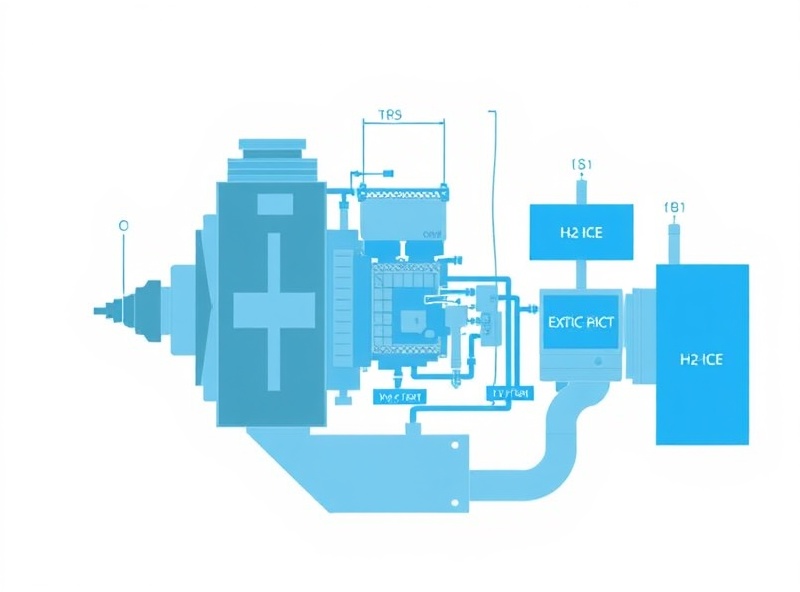
Hydrogen internal combustion engines produce zero carbon emissions by definition—the only exhaust products are water and small quantities of nitrogen oxides (NOx). Managing those NOx emissions is critical to meeting regulatory standards and realizing H2-ICE’s full environmental potential.
Understanding NOx Formation
In any combustion engine, nitrogen oxides form when nitrogen in the combustion air combines with oxygen at high temperatures. The hotter the combustion, the more NOx is produced. Modern H2-ICE systems have inherent advantages: hydrogen combustion can occur at lower peak temperatures than diesel combustion, naturally limiting NOx formation.
But it’s not enough. Regulatory standards require NOx emissions below 0.5 grams per kilowatt-hour for heavy-duty vehicles. Modern H2-ICE systems achieve this through two complementary technologies.
Selective Catalytic Reduction (SCR)
Selective catalytic reduction is not new—diesel vehicles have used it for years. SCR systems inject a urea-based reducing agent (AdBlue) into the exhaust stream. A catalyst converts NOx into harmless nitrogen and water.
H2-ICE systems benefit from SCR’s maturity. Suppliers have perfected the technology, making it cost-effective and reliable. The key advantage: SCR systems are modular and can be retrofitted to existing H2-ICE conversion kits.
Exhaust Gas Recirculation (EGR)
EGR is a complementary technology that recirculates a portion of exhaust gases back into the combustion chamber. This dilutes the fuel-air mixture, lowering peak combustion temperatures and reducing NOx formation at the source.
Advanced H2-ICE systems combine EGR with high-pressure direct injection, precisely controlling the amount of recirculated exhaust. Modern engine management systems optimize this in real-time based on load and speed conditions.
Integrated Systems
The most sophisticated H2-ICE engines use both SCR and EGR in an integrated system. This dual approach offers several advantages:
- Redundancy: If one system experiences a temporary issue, the other maintains emissions compliance
- Optimization: SCR targets tail-pipe NOx, while EGR reduces in-cylinder formation
- Durability: Lower combustion temperatures reduce engine wear, extending service life
- Cost Efficiency: The systems work together, reducing the scale required for each
Real-World Performance
Several production H2-ICE systems now achieve NOx emissions below 0.2 grams per kWh—well below regulatory minimums. This over-compliance provides margin for durability and performance variation across the vehicle’s service life.
For fleet operators, this means H2-ICE engines don’t just meet environmental regulations—they exceed them with room to spare. As maintenance practices are perfected and driver training improves, emissions performance will likely improve further.
The Path Forward
NOx control in H2-ICE engines is a solved problem. The technology is proven, scalable, and cost-effective. Fleet operators considering H2-ICE conversion can be confident that their vehicles will meet all current and anticipated emissions regulations.
The focus now shifts to manufacturing scale-up and supply chain maturation. As H2-ICE adoption accelerates, aftertreatment suppliers are investing in capacity and innovation, bringing costs down and performance up.
The regulatory pathway is clear. The technology is ready. The question is no longer whether H2-ICE can meet emissions standards—it’s whether fleets can scale the conversion fast enough to meet climate targets.