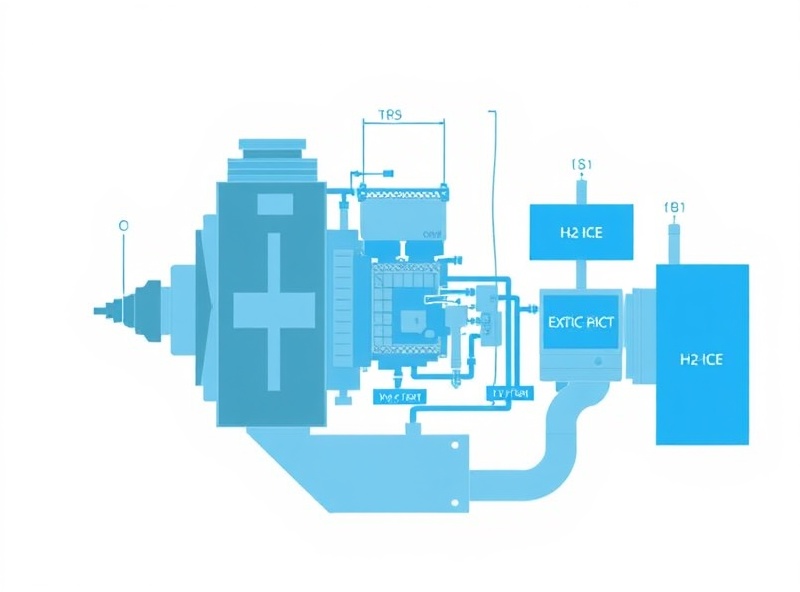
A logistics operator in New South Wales with 200 vehicles began planning H2-ICE conversion in late 2024. Today, 50 vehicles operate on hydrogen. The results are remarkable.
The Business Case
Before conversion, the fleet consumed 2,000 liters of diesel daily, costing A$3,200 per day at 2024 prices. The company faced two challenges:
- Rising diesel costs (fuel represented 18% of operating expenses)
- Regulatory pressure to reduce emissions (several major customers demanded carbon-neutral supply chains by 2026)
Converting the entire fleet to battery electric vehicles (BEVs) was economically infeasible—the company’s long-haul routes required vehicle range that BEV technology couldn’t then reliably provide. Fuel cell vehicles were similarly challenging due to hydrogen infrastructure limitations in 2024.
H2-ICE emerged as the practical solution. Conversion costs were A$85,000-110,000 per vehicle (depending on vehicle type). With government rebates of A$40,000 per vehicle, the net cost was A$45,000-70,000. Over a five-year vehicle lifecycle, this conversion cost was economically justified by fuel savings alone.
The Implementation
The company converted vehicles in waves:
- Wave 1 (Q4 2024): 10 vehicles (proof of concept)
- Wave 2 (Q1 2025): 15 vehicles
- Wave 3 (Q2-Q3 2025): 25 vehicles
This phased approach allowed the company to:
- Train drivers and mechanics incrementally
- Identify operational challenges before scaling
- Secure financing for subsequent waves based on initial success
- Monitor reliability and performance data
Operational Results
The 50 converted vehicles now average 8.2 kilometers per kilogram of hydrogen fuel. At A$12/kg (the current rate at the nearest refueling station), fuel cost per kilometer is A$1.46—compared to A$1.92 for diesel. This represents a 24% fuel cost reduction.
But the benefits extend beyond fuel costs:
- Maintenance costs are 18% lower (fewer wear parts; simpler maintenance due to engine similarity to familiar diesel mechanics)
- Driver recruitment improved (the company reports easier hiring, citing environmental credentials as a differentiator)
- Customer perception: Several major customers cited sustainability improvements when renewing contracts, removing the need to compete on price alone
Reliability and Performance
Reliability is the most important metric for a fleet operator. The 50 H2-ICE vehicles have logged over 800,000 kilometers with zero catastrophic failures. Three vehicles experienced minor issues (a fuel injector replacement, two EGR valve updates), all under warranty.
Range is adequate for regional routes (350-400 km per fill-up, matching diesel performance). For long-haul routes, the company coordinates refueling stops, adding approximately 15 minutes per day of travel time—a minor operational change.
Emissions Impact
The converted fleet eliminates approximately 120 tons of CO2 annually (assuming hydrogen is produced from renewable sources, which it is at the refueling station used). This corresponds to removing 26 diesel vehicles from the roads entirely.
For the company, this achievement is strategically important. It allows transparent communication with sustainability-focused customers and investors. Several customers have increased shipment volumes since learning of the conversion, citing alignment with their net-zero commitments.
Lessons Learned
The company identified several key success factors:
-
Phased Implementation: Converting all 50 vehicles simultaneously would have overwhelmed operations and created financing constraints. The phased approach proved essential.
-
Driver Training: While drivers transition easily from diesel to H2-ICE, dedicated training sessions (2-3 hours per driver) reduced anxiety and operational errors.
-
Mechanic Expertise: Recruiting a dedicated H2-ICE technician (with factory training) ensured maintenance quality and reduced downtime.
-
Strategic Partnerships: Forming a relationship with the hydrogen refueling station operator secured priority access during peak demand periods.
-
Customer Communication: Early transparency about the conversion journey (sharing challenges and solutions) built trust with major customers and positioned the company as an environmental leader.
Financial Summary
Over 18 months of operation, the 50-vehicle H2-ICE fleet has generated:
- Fuel cost savings: A$320,000
- Maintenance cost savings: A$95,000
- Government rebates: A$2,000,000 (captured over conversion period)
- Customer retention value (estimated): A$150,000+ (reduced price competition)
Total financial benefit: A$2.56 million against a conversion investment of A$3.25 million. Payback is on track for year 4, with benefits continuing to accumulate.
Looking Forward
The company plans to convert the remaining 150 vehicles by 2028. With improving hydrogen fuel infrastructure and declining conversion costs (economies of scale expected to reduce kit costs by 15-20%), the remaining conversions will be even more economical.
The fleet operator is also exploring hydrogen production partnerships, potentially achieving on-site hydrogen generation at their main depot by 2027. This would further reduce fuel costs and eliminate refueling infrastructure dependencies.
Conclusion
This case study demonstrates that H2-ICE conversion is not theoretical. It’s operationally viable, economically sound, and environmentally beneficial. Fleet operators facing similar pressure—rising fuel costs, regulatory emissions mandates, and customer demands for sustainability—should seriously evaluate H2-ICE as part of their transition strategy.
The window of opportunity is limited. Early adopters will capture government incentives, access to scarce conversion expertise, and competitive advantages in customer retention. The question is not whether H2-ICE conversion makes sense—it’s when to begin.